 |
|
|
|
|
|
|
|
|
|
|
|
|
|
|
|
 |
 |
 |
|
||||||||||||
 |
 |
 |
|
||||||||||||
 |
 |
 |
|
||||||||||||
 |
 |
 |
|
||||||||||||
 |
 |
 |
 |
 |
 |
|
|||||||||
 |
 |
 |
|
||||||||||||
 |
|
||||||||||||||
 |
 |
|
|||||||||||||
 |
|
||||||||||||||
 |
|
||||||||||||||
 |
|
||||||||||||||
 |
|
|
|
|
|
 |
 |
 |
 |
 |
|

 |
|
|
|
|
|
 |
|
||||
 |
 |
 |
 |
 |
|
 |
 |
|
|||
go to
ARCHIVE
to see topics
on all the days
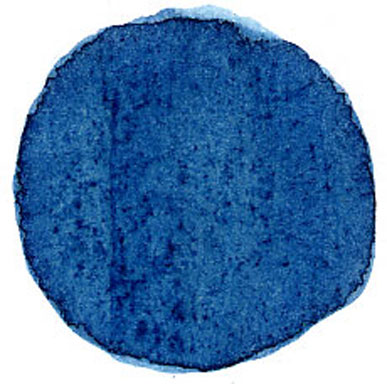


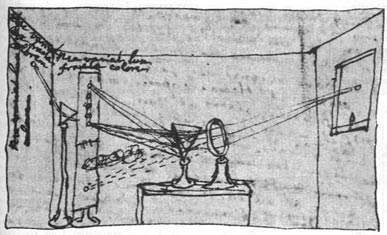
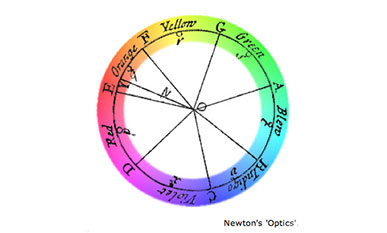
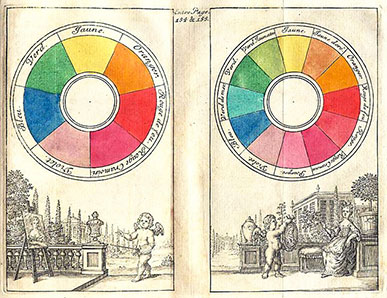
image Above
Isaac Newton's Drawing: Seeing Light
From
Lecture - 7/8/99 Lera Boroditsky [link]
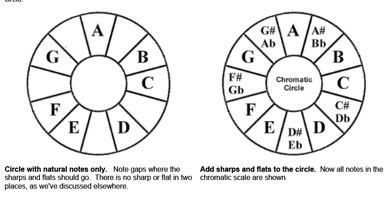
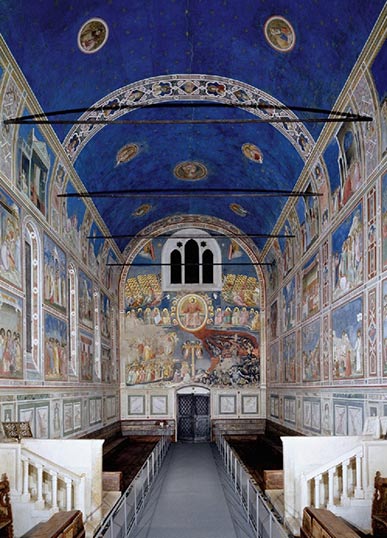
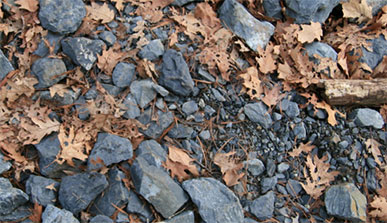
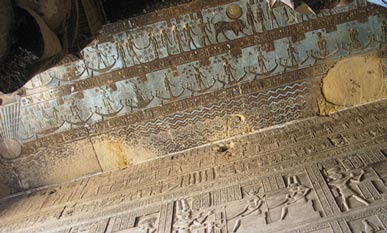
image above
At several places within the Temple of Dendera the colors from antiquity were visible. Here you can see the remains of a bluish pigment on the ceiling. The ancient Egyptians used two blues. One is the Egyptian blue frit described in an earlier blog entry and the other azurite. It is impossible to tell which was used here without analyzing a fragment of the pigment. I suspect because the blue does not seem to be of a greenish cast it most likely is Egyptian Blue. Most azurite pigments I have seen have a definite blue/green appearance. Quote from: Margaret Short Fine Arts Blog

“I want to see indigo now—now!” – Oliver Sacks
What makes Sacks’ article specific to this blog, is, in the New Yorker Article, his rapturous color revelation of seeing the “huge, trembling, pear-shaped blob of the purest indigo”.
image on left
indigo plant extract
Extract of Indigo plant applied to paper Date 2004
Author prepared by Palladian
wikimedia commons
As a follower of Oliver Sacks it was exciting to read his current New Yorker article “Personal History Altered States - Self-experiments in chemistry.” For years I have been reading his stories in the New Yorker and have seen his film “Island of the Color Blind”.
image on left
still from sacks' film
“Island of the Color Blind”
image on left
video on Don Lattin's book
“Distilled Spirits”
At about the same time, I was also reading the religion writer Don Lattin’s recent books “The Harvard Psychedelic Club” and his prequel, “Distilled Spirits”. Lattin’s books also delve into the 1960’s era of drug experimentations that Sacks is recalling from his student days.
image on left
Adding a second (up-side-down) prism to Newton's set up recombines the different wavelengths into white light.
[source: Coren et al., Sensation and Perception, 5th Ed.]
from Lecture - 7/8/99
Lera Boroditsky [link]
Below are a few paragraphs from the New Yorker article: Sacks’ describes his altered states of seeing indigo blue. These few passages are rampant with color theory and color history as well as an abundance of references
image on left
Newton's Optics:
citation: the star garden - NewtonAndLight.
. . . “But on the weekends I often experimented with drugs. I recall vividly one episode in which a magical color appeared to me. I had been taught, as a child, that there were seven colors in the spectrum, including indigo. (Newton had chosen these, somewhat arbitrarily, by analogy with the seven notes of the musical scale.) But few people agree on what “indigo” is.
image on left
probably Claude Boutet's
7-color and 12-color color circles – Date: 1708
Traité de la peinture en mignature (The Hague, 1708), reproduced in The Creation of Color in Eighteenth-Century Europe
Author C. B. (probably Claude Boutet)
Wikimedia Commons
image on left
7 note scale and 12 note scale.
the musical concept of tone intervals readily relate to the same color intervals.
From Article
Personal History Altered States
Self-experiments in chemistry.
By Oliver Sacks
August 27, 2012
Image on left
The Scrovegni Chapel with frescos by Giotto
Photo of interior drawingatduke.blogspot.com
The Scrovegni Chapel, or Cappella degli Scrovegni, also known as the Arena Chapel – a church in Padua, Veneto, Italy. It contains a fresco cycle by Giotto, completed about 1305. Giotto’s fresco cycle focuses on the life of the Virgin Mary and celebrates her role in human salvation.
I had long wanted to see “true” indigo, and thought that drugs might be the way to do this. So one sunny Saturday in 1964 I developed a pharmacologic launchpad consisting of a base of amphetamine (for general arousal), LSD (for hallucinogenic intensity), and a touch of cannabis (for a little added delirium). About twenty minutes after taking this, I faced a white wall and exclaimed, “I want to see indigo now—now!” And then, as if thrown by a giant paintbrush, there appeared a huge, trembling, pear-shaped blob of the purest indigo. Luminous, numinous, it filled me with rapture: it was the color of heaven, the color, I thought, that Giotto spent a lifetime trying to get but never achieved never—achieved, perhaps, because the color of heaven is not to be seen on earth. But it existed once, I thought—it was the color of the Paleozoic sea, the color the ocean used to be. I leaned toward it in a sort of ecstasy. And then it suddenly disappeared, leaving me with an overwhelming sense of loss and sadness that it had been snatched away. But I consoled myself: indigo exists, and it can be conjured up in the brain.
image on left
Blue rocks on Blue Hills.
January 13 2008
Author BenFrantzDale
For months afterward, I searched for indigo. I turned over little stones and rocks near my house. I looked at specimens of azurite in the natural-history museum—but even that was infinitely far from the color I had seen. And then, in 1965, when I had moved to New York, I went to a concert at the Metropolitan Museum of Art.
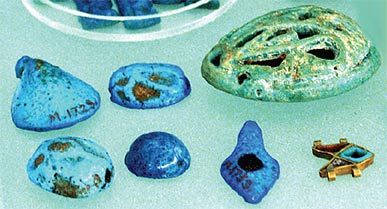
In the first half, a Monteverdi piece was performed, and I was transported. I had taken no drugs, but I felt a glorious river of music, hundreds of years long, flowing from Monteverdi’s mind into my own. In this ecstatic mood, I wandered out during the intermission and looked at the objects on display in the Egyptian galleries—lapis-lazuli amulets, jewelry, and so forth-and I was enchanted to see glints of indigo. I thought, Thank God, it really exists!
images on left
Amulets from the Metropolitan Museum of Art, NYC Collection
During the second half of the concert, I got a bit bored and restless, but I consoled myself, knowing that I could go out and take a “sip” of indigo afterward. It would be there, waiting for me. But, when I went out to look at the gallery after the concert was finished, I could see only blue and purple and mauve and puce—no indigo. That was forty-seven years ago, and I have never seen indigo again.
read the New Yorker article